
LOOKING TO THE YEAR AHEAD
Through eyes of longtime seekers of breakthrough-energy

Nikola Tesla once said, “The 21st century will be mine.” Tesla (1856-1943) predicted this would be an era of abundant clean decentralized electrical power, based on harnessing what he called “Radiant Energy.”
Yet a quarter of the 21st century is now behind us and we’re still warring over oil supplies!
Tesla and many other bright minds have glimpsed nature’s secrets for how to create instead of destroy. Even when their discovery was well worth investigating, they ended up feeling as if locked into a cell labeled “fringe science.”
Maybe the time was not yet.
Windows of opportunity in 2026?
But in a period of sudden changes such as we’re in, closed doors and windows sometimes flap open. We can’t predict and can only speculate about what could happen in this coming year.
Regardless, I’ve been reconnecting with some of the breakthrough-energy researchers I haven’t contacted for years. Chatting digitally and on phone–calls as long as three hours–about what we’re hoping for in 2026.
Seeking breakthrough-energy ‘moonshot’
A couple of such connections were an exchange of Substack comments. Reed Huish, founder of ZPower, commented on how fast a product can change everything, once it is out in the world working:
He heard about AI 30 years ago, but few people took it seriously until ChatGPT. “That’s only 3 years ago. Now it is redirecting economies.”
So it will only take one useful ‘Breakthrough Energy product’ to open the floodgates for the field, he said.
“That’s when we have our ‘ChatGPT moment.’”
Huish considered our decades as seekers of energy breakthroughs “…a long time. But with all the activity happening in LENR and ZPE (zero-point energy), the hope is 2026 is the year to bust out!”
Break for January news
Before I dig into what I heard in the longer conversations, here are a few news items:
A hands-on workshop for experimenters is scheduled by Richard Friedrich for March 5-7 in downtown Dallas, Texas. Topics will include tips for building the late John Bedini’s ‘Schoolgirl Motor,’ said to charge batteries with Radiant Energy.
Aaron Murakami’s Energy Science & Technology Conference, ESTC 2026, will be in June, details to be announced by eMedia Press very soon. I expect an update on the Tesla Turbine work, in which experimenters place hopes for a commercial product, or at least an eventual DIY project for off-grid homeowners.
This month, some articulate researchers are featured on Gaia TV’s upcoming episode about breakthrough energy. Jason Verbelli says the series is called Forbidden Technologies: Humanity’s Stolen Future. The episode could introduce energy-source possibilities to a large new audience in the nontechnical public.
Work continues on Searl’s Space Energy Generator
Jason Verbelli announced that he’ll be featured January 16 –regarding the technology of the late John Searl of England.
“When it comes to ‘zero point energy,’ UFOs, ‘free energy,’ rotating superconductors and exotic technologies...my mentor Professor John Searl was the most controversial of everyone,” Jason wrote to his social media followers. Verbelli said he has boxes of Searl’s belongings and found original photos. Such archives probably shed light on Searl’s thinking.
Thomas Valone was at the same 1989 meeting in Switzerland where I first met and photographed John Searl.
Dr. Valone’s cheerful reply to my question about 2026 included forwarding his Future Energy eNews and an email thread between himself and Professor Garret Moddel.
Valone’s eNews included breakthroughs in improving on known discoveries – thermal electric chips, now micro-fabricated and ultra-thin; and a new method of splitting water into hydrogen for fuel; and “First Space Solar Power Plant Launches.”
(I shudder at that last bit of news; in a later post I may tackle the topic of beaming power via microwave beams from solar satellites down to earth. It’s not the harmony-with-nature approach.)
Colorado team’s goal 2026--reproduce successful result consistently
Regarding Dr. Moddel, Tom Valone had asked for his input last month. Valone was to be a guest on CoastToCoastAM radio, and Tom knew its audience of millions would ask how soon a zero-point energy (ZPE) harvesting product will be on the market.
Dr. Moddel confirmed that such energy is real. But making use of it to provide useable power “involves subtleties.”
What then could Valone tell the public about the zero-point energy findings of Moddel and his team?
In reply, Dr. Moddel encouraged Valone to just say what he knows: their experiment did demonstrate ZPE energy harvesting, and they are now working hard to reproduce the result consistently.
Atomic hydrogen for a clean-energy revolution?
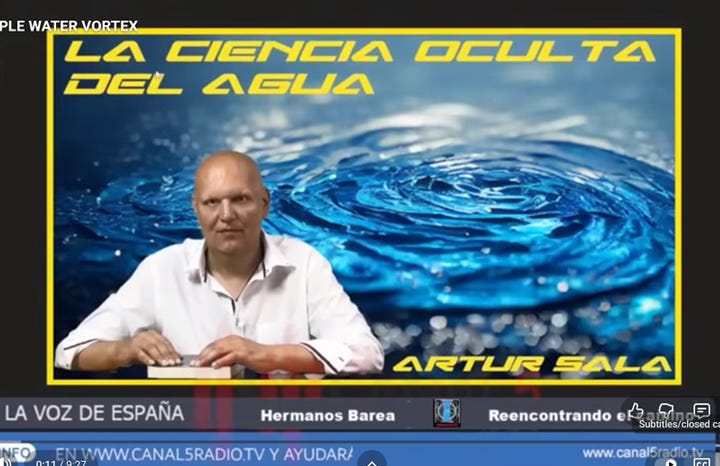
Artur Sala of Barcelona, Spain, has been described as a “físico disidente” (dissident physicist.) A colleague in the Netherlands, Jeroen Van Straaten, introduced me to Artur Sala when I needed advice about producing Energía Universal, the Spanish-language edition of Hidden Energy: Tesla-inspired Inventors and a Mindful Path to Energy Abundance.
I found Artur to be highly knowledgeable about the global history of revolutionary energy-related discoveries. (He gave me two volumes of his Magna Ciencia books and I saw many names I recognize. The series is an excellent education for Spanish language readers, which I’m sadly not.)
To my New Year question, Artur replied:
“For 2026, I hope we focus on the simplest, easiest and most hidden way to produce energy: atomic hydrogen.” Nobel Prize winner Irving Langmuir made the discovery but it was silenced, Artur said.
Nevertheless, a clean-energy system based on using ‘atomic hydrogen’ is “the simplest, quickest and clearest way to obtain the unlimited energy to move this world forward and forget about the utter nonsense and absurdity that is hydrogen nuclear fusion,” Artur concludes.
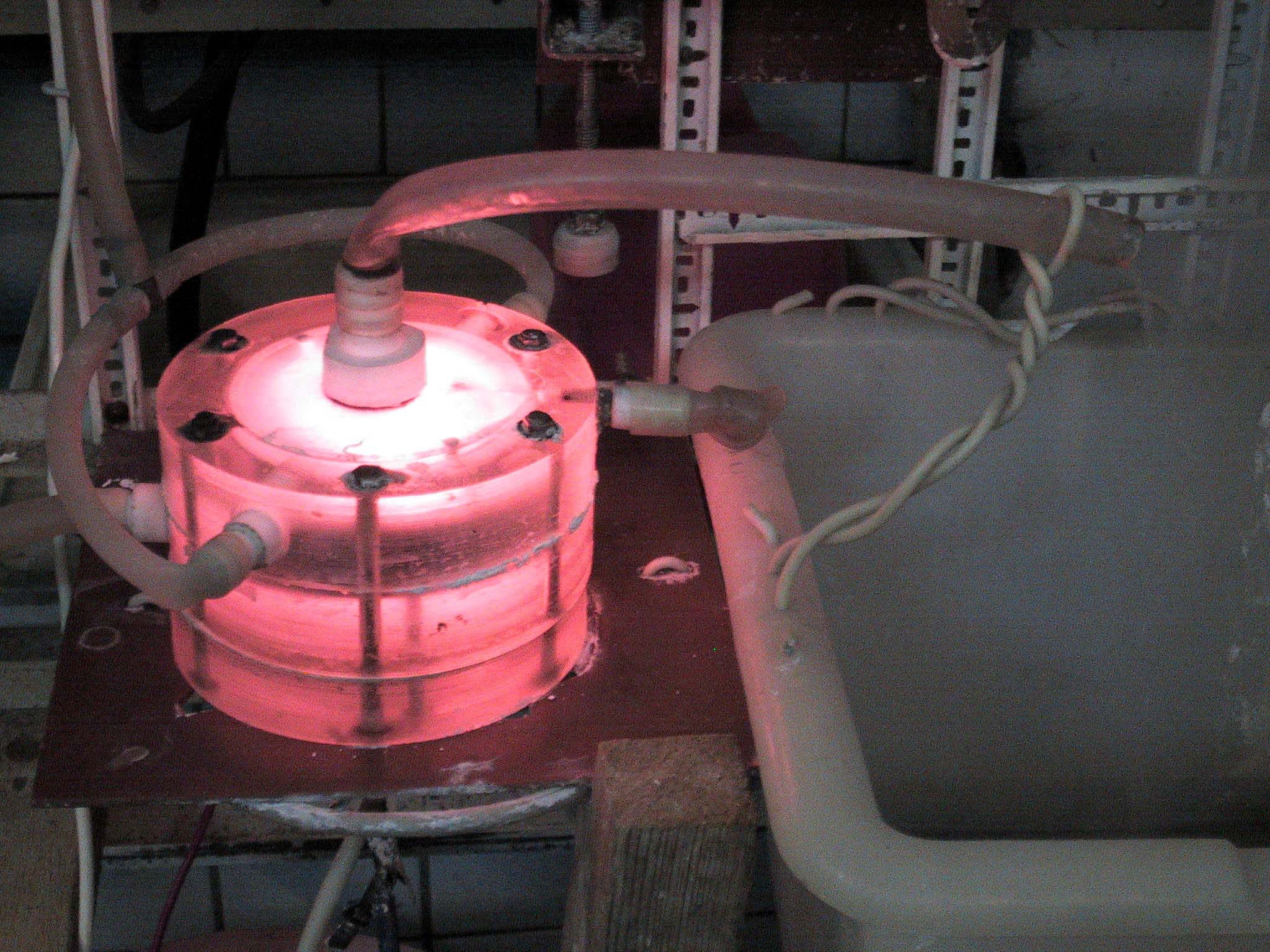
(I’ve followed the work of a Russian Professor that Artur cited in his reply. Philip Kanarev and his countryman Alexander V. Frolov, also cited, continued to work with that ‘atomic hydrogen’ approach despite financial challenges they faced.
(I learned about the economic struggles of unfunded Russian scientists when I met Kanarev at a 2001 conference in Switzerland. Juha Hartikka’s photo of Kanarev’s early plasma experiment below shows Kanarev had to involve his bathtub. What it doesn’t show is that those scientists worked in unheated rooms in winter.)
In speaking with the above sampling of longtime researchers, I’d tried to elicit views about our prospects for breakthroughs in 2026. However, they and the other serious experimenters are more inclined to discuss scientific principles they’re learning.
And that is more important.
Yet I’ll try to create a briefer, easier read in Part 2, to be posted in a few days.
As brilliant as Tesla was, he was unable to fathom the depth of human corruption, ignorance and lemmings-over-the-cliff potential. 21st century and still fighting over oil indeed...
This is a very good theme for the next entry of Uranus on Gemini next April!