
Harmony with nature, part 2
Earth Day next week; what would Schauberger say?

Nikola Tesla, Walter Russell, and Viktor Schauberger are names that, in the 20th century, many researchers into ‘breakthrough energy’ heard about first.
Last week, I began introducing Schauberger and his conclusion that technology has gone in the wrong direction.
Afterward, Sepp Hasslberger reminded me of Schauberger’s exact statement to technologists, “You’re using the wrong kind of motion.”
What then is the right kind of motion?
Thanks to Schauberger, who studied energy’s preferred paths, it’s now known that cooling, frictionless, implosive systems can rejuvenate water and our health while performing work such as energy generation. I’ll return to that in a moment.
First, who was this man Viktor Schauberger?
I’ve read his biographies, and wrote chapters of my own about him. About a man who stubbornly refused the offer of a university education and instead chose to go right to work as a forest warden, yet he developed many key insights that experts in energy and water science were overlooking. How?
To put it briefly, Schauberger’s love for the natural world made him unusually attentive to even its smallest shifts and changes.
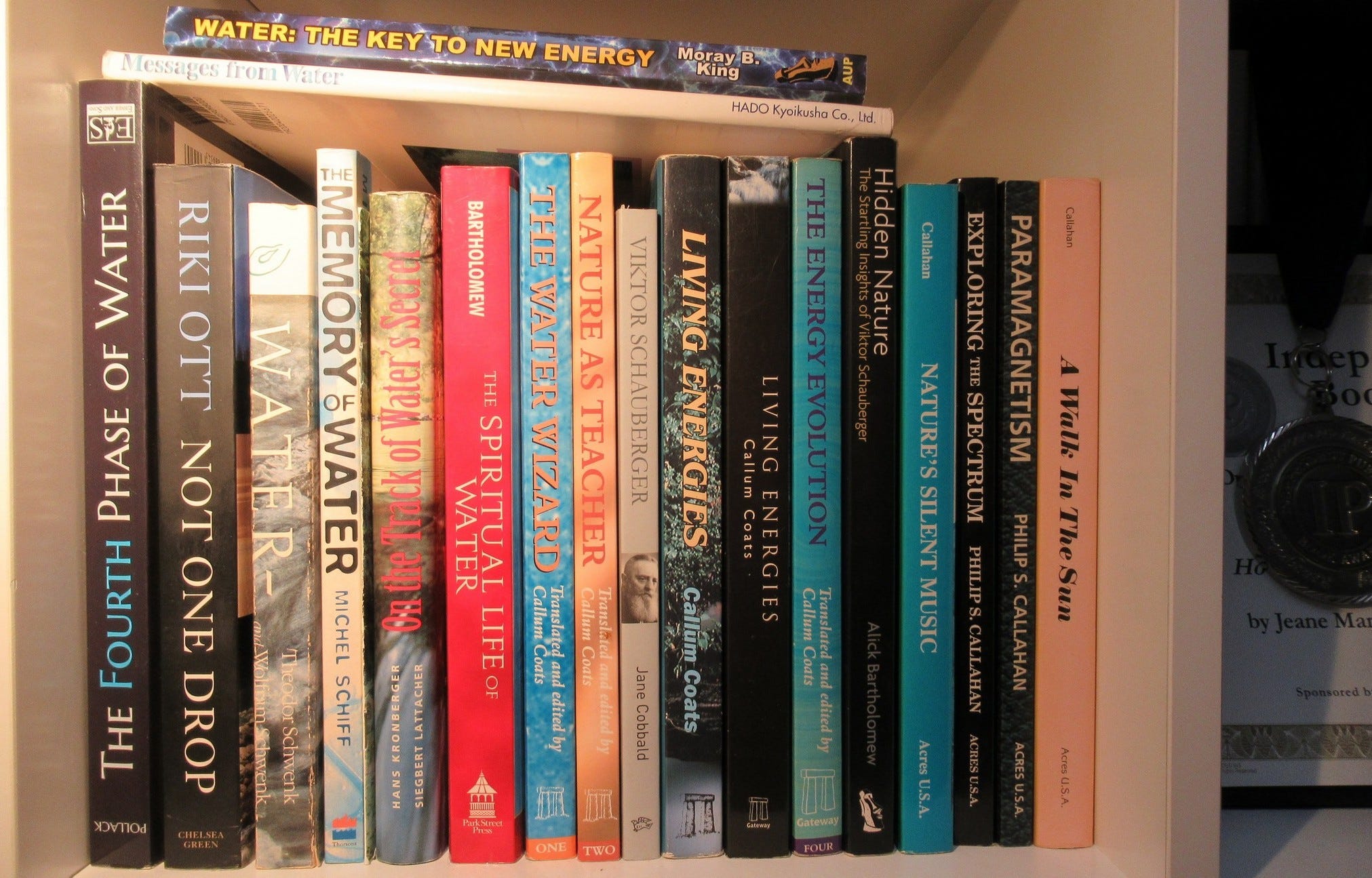
Schauberger’s job was to steward a remote forest owned by an Austrian prince. Today there’s no such untouched, vast spread of trees, creeks, mountains. Schauberger watched the results of temperature changes in air and water, and of swirling, vortexian motions. How fish and trees were helped by a levitative force. And other phenomena of such a large unbroken ecosystem.
He observed deeply.
As a result, Schauberger eventually taught how technologies that produce friction, heat, and radiation and/or explosion are the wrong moves, unless dominated by the force opposite to explosion.
Explosive/expanding force breaks down substances, destroys something. Nuclear fission, fuel-burning and radiation are examples he pointed out.
But he had good news. Energy-generators or agricultural or water-related technologies can be harmonious and harmless. If dominated by that other force. Implosion.
Implosive force creates, enlivens.
Last week I introduced mechanical engineer named Walter Baumgartner, who taught me basics about implosion technology.
The next time I met Walter, for his personal reasons he’d changed his name to William Baumgartner. During a further after-conference gathering in Colorado, he guided a few of us through a meadow and to a natural spring. He gave us the chance to drink water at its height of vitality, an experience Schauberger had written about and explained.
Then when I was on my cross-country research trip in the early 1990s, I visited Baumgartner in New Mexico. He was attempting to create the type of energy generator that involved water in an inward-flowing spiral of motion.
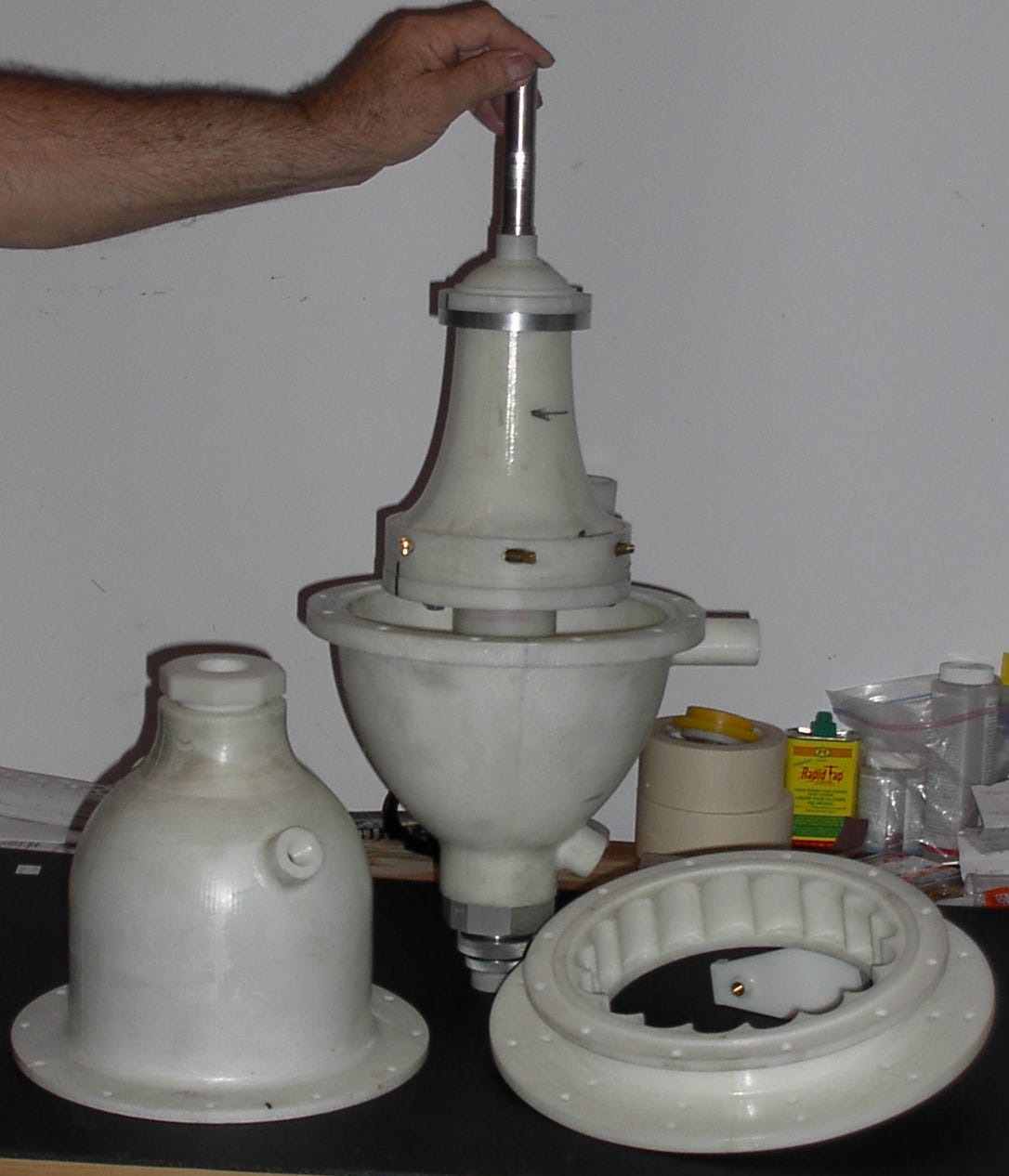
William started with hand-whittled models of forms for making special water pipes. They had an ear-shaped interior that narrowed down to a small cross-section.
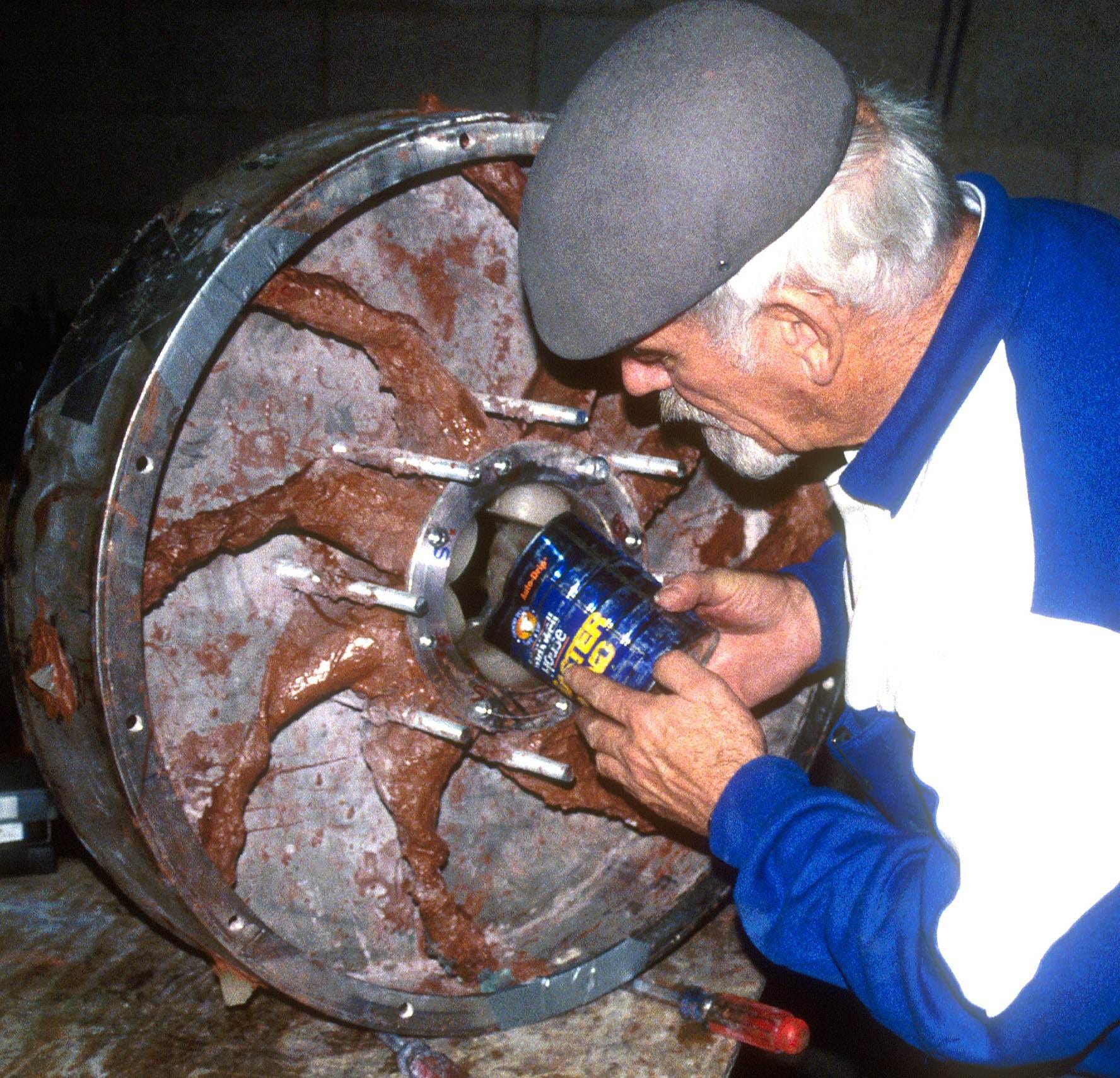
The picture below shows just one early stage of creating the shapes he wanted to pour into the outwardly crude-looking pink molds.
With today’s prototyping machines, he wouldn’t have had to go to such lengths to replicate Schauberger’s ‘twister pipes.’
A decade later, Baumgartner moved to British Columbia. His wife Maggie and I became close friends.
William asked me to help him write a book about his discoveries, but he died at the end of 2010, before we were even near to completing the project.
As happened all too often when a longtime researcher/experimenter in the new-science community died, much of his life’s work disappeared. In William Baumgartner’s case, Maggie was, unknown to friends, developing dementia and gave his boxes of materials away without recording where they went.
However, a new generation of breakthrough-science colleagues are ensuring that valuable collections about advanced science go into an accessible archive. They want knowledge to be open-sourced.
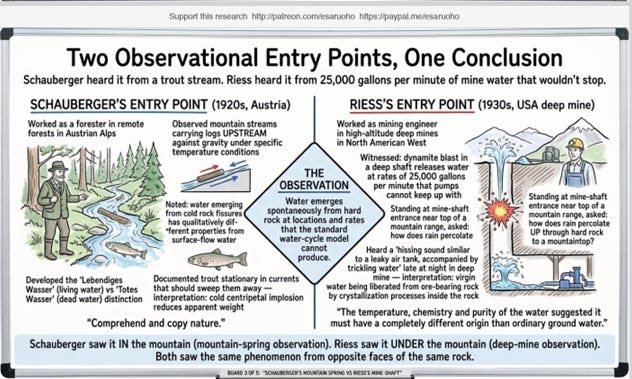
Here’s a sample of numerous note-boards created by the hard-working archivist from Finland, Esa Ruoho, to mark subtopics of the document-collecting he’s done during several decades:
I’ll be reporting more on that very helpful development.
It was their willingess to let nature speak first, the energy was just a product of something bigger.
Centropy-Project