
Breakthrough Tech gets Investment Fund
BTIF founders focus on altruism, open-sourcing, and vetting of working inventions.

When I saw Drs. John H. Reed and Nick Begich, Sr. in serious conversation across a small dinner table in a convention center’s restaurant, I sensed good news.
I had worked closely with Nick three decades ago on a book project, appreciated his integrity, and always enjoyed reconnecting. In recent years I realized that John is equally a principled humanitarian. So whatever they were brewing could probably benefit the world.
My intuition turned out to be correct.
That day, each of them had attended the panel on ‘free energy’ organized by Toby Grotz as a final event of July’s USPA (United States Psychotronics Association) conference in Illinois.
After each panel member had our say, the audience questioned why a shift to truly clean energy was so slow in coming. They heard many reasons. Yet they were reminded that open-sourcing of a breakthrough invention–even the simple circuit described by one participant–could help lead to the long-awaited beginning.
Amid further lively debate, Nick had stood up and made a generous offer of $50,000 seed money to start such an invention on its way to the goal, if it met necessary requirements. And the money would come out of his own funds, to benefit the greater good.
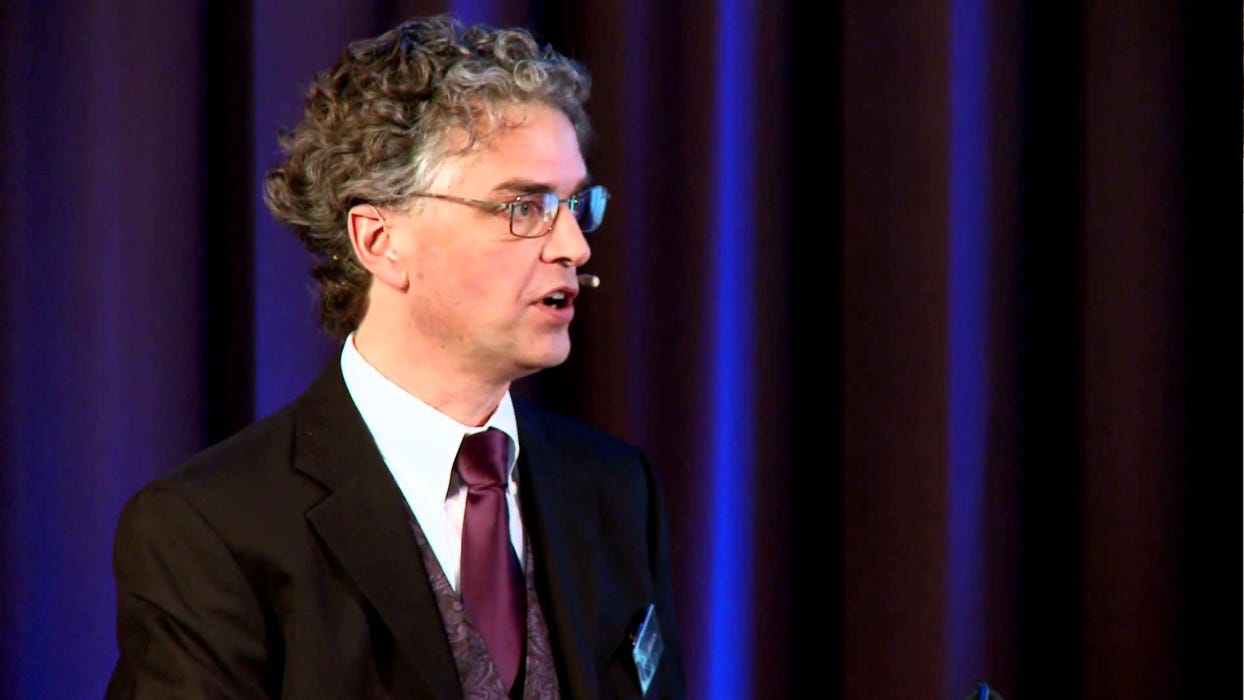
That lit the fire. As I remember, everyone started talking at the same time.
Nick Begich and John Reed later told me what happened after we left that panel-discussion room, and this week I spoke with each of them again–first Nick who was working on a project in Colombia, then John in Eastern USA–and asked for more details.
In the hotel after the panel event, John had approached Nick and offered to match his $50,000 if they set up an appropriate legal entity. And they did talk for hours, first in the hotel and then after they returned to their home states.

They set up a new company called Breakthrough Technologies Investment Fund (BTIF) LLC, which they funded with $100,000.00.
I wasn’t too surprised. I’ll tell you more about why I sensed a change-making partnership forming in that hotel restaurant in July.
First, here is the gist of the announcement placed in the USPA newsletter this fall:
Their new company was established for the development and production of highly innovative devices in the psychotronics, healing, and new energy fields.
Reed and Begich together are providing $100,000 as initial investment funds for inventors and developers of such devices. They have generously offered that any net income or other benefits from investments of their initial $100,000 will go to USPA (United States Psychotronics Association.)
BTIF will consider proposals for several types of devices. The founders hope that others with a strong interest in development of breakthrough technologies in the beneficial psychotronics, healing, and new energy fields will join with BTIF, so that the investment fund can grow and be able to fund even more inventors and startup companies.
(The health, wellness, and healing devices category is better-known, but if you’re unfamiliar with psychotronics, that category means technologies that beneficially affect the brain and mind.
“These would include devices whose use will enhance memory, intelligence, learning, or knowledge acquisition; enhance psychic abilities of any kind, such as remote viewing, telepathy, psychometry, or spiritual healing; enhance the placebo and other mind-body effects to treat one’s own diseases and disorders.”)
Readers of Aether or… may be most interested in the third category– New Energy and Propulsion Devices.
“This would include any device that generates usable electricity or propulsion operating on new principles of energy production, such as zero-point energy, vacuum energy, magnetic fields, anti-gravity, water as fuel, nitrogen as fuel, or any other ‘free energy’ method.”
“The development and production of any of these devices could potentially have a dramatic effect on the betterment and advancement of humanity. So if you have developed or are developing any such device, or know someone else who has done so, please send us information or a proposal, and we will follow up with you.”
“Proposals and applications for funding are being accepted, but with the clear understanding that any funding is contingent upon thorough due diligence.”
The announcement ended with, “Please send all communications by email, with attachments, if necessary, to John H. Reed, M.D. at joreed43@gmail.com. You can also phone 443-858-0757. Our mailing address is: Breakthrough Technologies Investment Fund, 6800 Roosevelt Ave., #701, Allen Park, MI 48101.”
Here’s a quick sketch of what I know about the BTIF’s founders.
When I met Dr. Nick Begich, he was young, yet he already had an honorary degree as a result of impressive research accomplishments. He’d received his doctorate in traditional medicine from The Open International University for Complementary Medicines in 1994.
Although teaching was not his profession, he had been voted president of the Alaska Federation of Teachers and the Anchorage Council of Education. His natural abilities as a public speaker, enhanced by being in a political family, were fast unfolding.
Nick took out a loan on his house to publish our co-authored Angels Don’t Play This HAARP. The book could have faded out of sight, being nonfiction by new authors and self-published in remote Alaska. However, Nick took the topic to international audiences by speaking on thousands of radio broadcasts and at large events and even to the European Parliament.
Meanwhile he supported his family by, for instance, consulting for Alaskan natives, and gained valuable experience in the arena of business ventures. Nick Begich is a swift learner. He published additional well-researched books.
Nick’s speeches during the USPA conference urged people to respond appropriately when they see a need. “Step into it. Do something positive.”
Dr. John Reed’s life shows his own responses to that call. Some details about his service to frontier science are on his LinkedIn page, such as leading the World Institute for Scientific Exploration (WISE.)
It evolved from his work with the Society for Scientific Exploration. “One of the big interests there was alternative energy. By that I don’t mean wind and solar. We’re talking about very new energy areas…”
Reed’s first career resulted from earning an M.B.A. in finance and a couple of Masters degrees, then working in the venture capital field.
At age 42 John left Wall Street, began his medical studies, and earned an M.D. from the Marshall University School of Medicine. He then did a medical residency at Johns Hopkins University in preventive medicine, “because there is a need to prevent diseases, not just cure them once they occur.”
I found common ground with John when he told me he was born and raised in northern Michigan on a small family farm and he milked cows as well as pitched hay. That mirrors my family’s experience after we had relocated to northern Idaho during my school years. Farm kids learn life lessons in the hayfields.
John Reed’s background explains (to me, anyway) his appreciation of people who work hard physically for a living. He and Nick Begich, regardless of their high degrees from universities, have no educational requirements for applicants for the Breakthrough Technology Investment Fund. And applicants don’t need to have any particular work experience.
Questions will of course be asked on an application form for BTIF, and references, just as when we apply for any funds or job. Stating where you went to school is a part of a due-diligence background check on anyone, including doctors.
What the BTIF screening looks for is creativity and that the device works, they both told me. It can’t just be theory or an ‘r and d’ project, but it can be a crude prototype if able to do something useful that standard science can’t explain. And the applicant must have integrity.
The founders of the fund didn’t receive much response to their announcement in the newsletter and are not surprised. They understand that most inventors are not interested in open source, Nick Begich told me.
“And that’s fine…We encourage people to move their science forward, whether they use our vehicle or not. We want to help stimulate an altruistic open-source option.”
I continue, as a lay person, to enjoy and learn from your articles. Thank you!
( 1 ) The patent office has what they informally call the ''Witchcraft Rule''. This is that nothing can be patented that works on an unknown principal. Unless a device can be explained by already known laws of physics it cannot be patented even if it works. If your space drive moves a spaceship without any equal and opposite reaction, if your motor draws energy directly from the ether, if your psychotronic device includes the latent mental powers of the operator as part of the functioning, it cannot be patented.
One patent official told a lawyer for one applicant , ''I would not grant an application for anything so preposterous no matter what proof was submitted''.
( 2 ) If a patent is about to be granted there is one final step: the design is sent first to the Pentagon where a technology specialist reads it and decides if it has a potential military application. If they decide they want a monopoly on it it is declared classified. The patent will still be issued, but only the number will be published, not the design. After that, you are forbidden to tell anyone how it works, even your lawyer if you decide to appeal the classified designation. You will be paid whatever they decide is a fair market value for it, but cannot sell it to anybody else.
To avoid this, the thing to do is apply for a patent in other countries at the same time you apply for a U.S. patent. They cannot declare it classified if it is already public in some other country. All NATO countries will go along with American orders to keep it secret, so I suggest sending patent applications simultaneously to Iran, Russia, Venezuela and other countries that are not part of the American Empire.